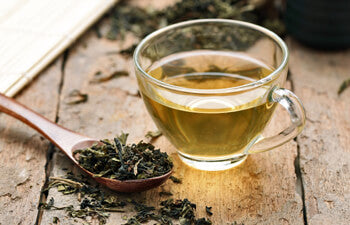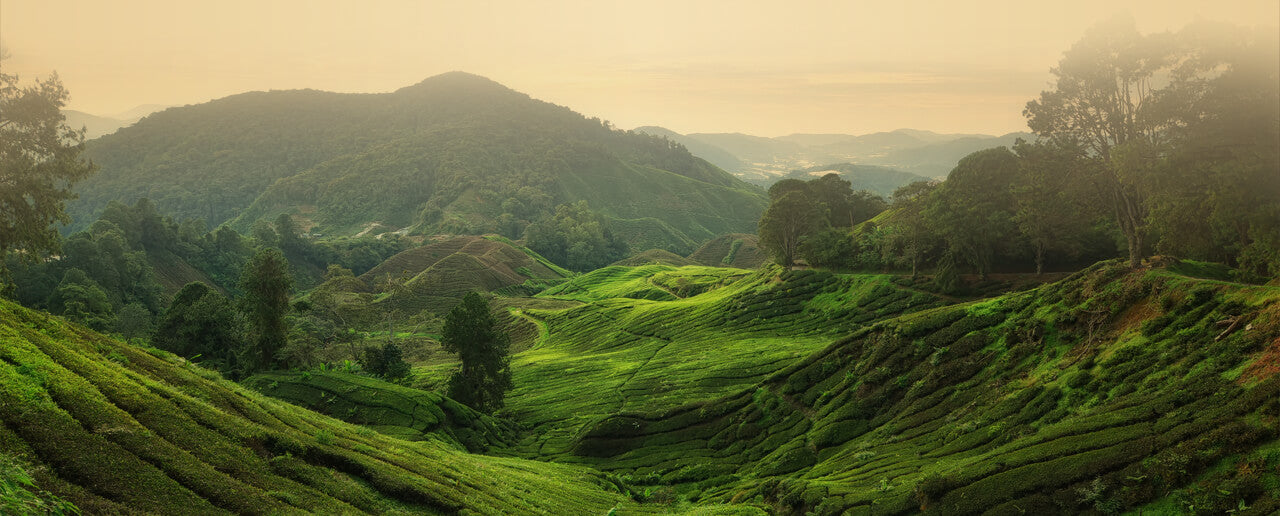
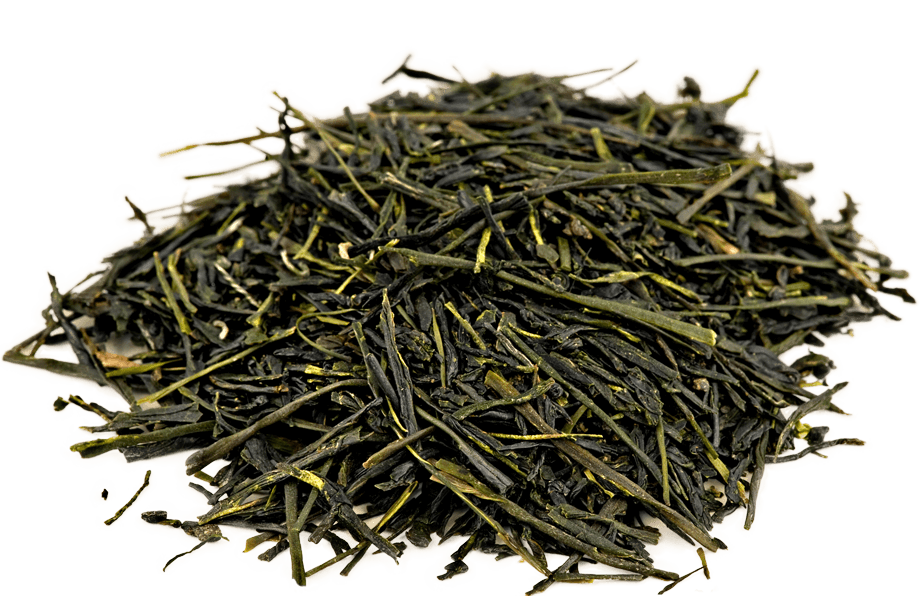
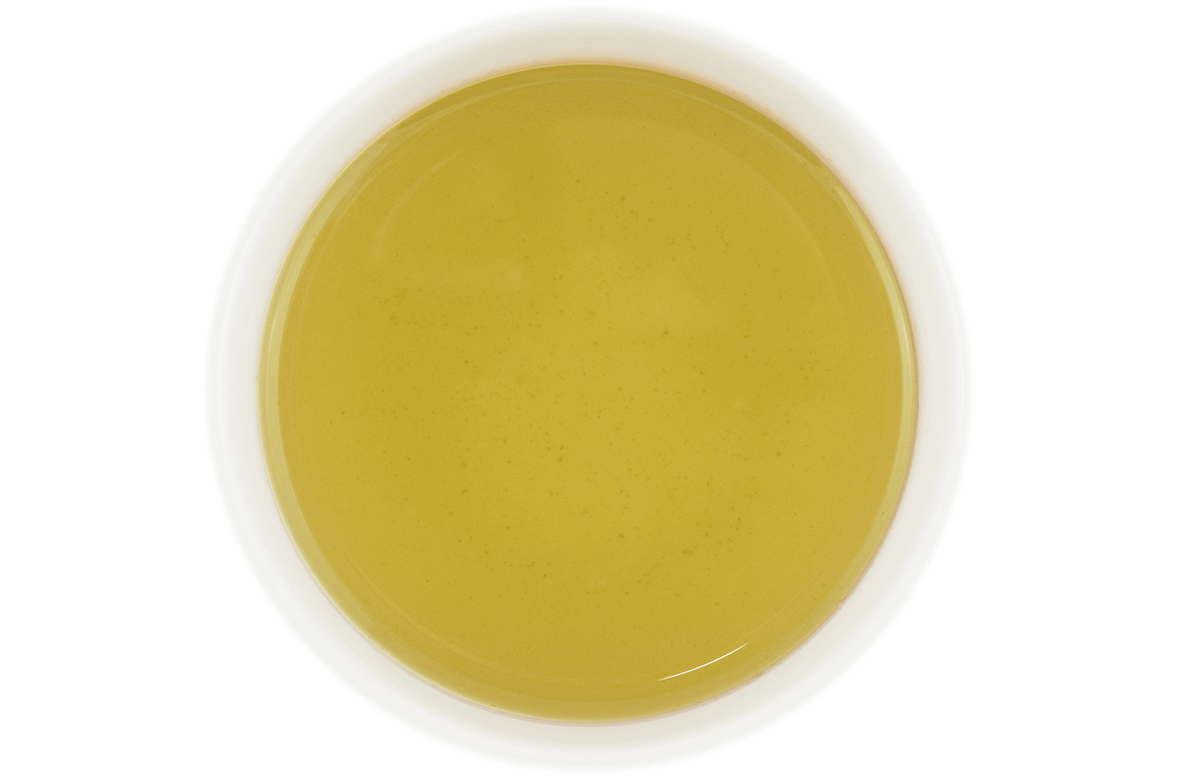
Our organic Gyokuro (pronounced gyo-KUR-o) represents the pinnacle of organic Japanese green tea. It is shaded prior to harvesting, which stresses the tea plant, resulting in higher chlorophyll content. In the cup, this creates a fuller-body and bolder vegetal quality. In addition, the light green infusion exhibits a sweet and nutty flavor that is less bitter than our Sencha. Unlike many "Japanese" green teas available in the United States, this organic loose tea is actually grown in Japan.
|
Ingredients: organic Japanese green tea |
|
Serving Size: one level teaspoon per 8 oz cup of water |
|
Aubrey Says: I'm always amazed by just how vegetal this organic green tea is! |
|
Jeremy Says: While it's a bit pricey for everyday drinking, this tea is a wonderful indulgence for the true green tea lover. |
|
Sarah Says: When I open a bag of Gyokuro I can smell the cool ocean air. Even though I have never been to Japan, I can only imagine that this is what standing on the beach and watching the waves crash, would smell like. |
Posted by Dave on 13th Oct 2011
This superb green tea is the best green I've ever had. It is grassy depending upon steep time. I typically do 2m15s but have tried closer to 3m only to find I'd approached the razor's edge in my tolerance for the grassy flavor. Backed it off 10s at a time until I found the right balance.
It has a great green color and goes down smooth every time.
Posted by Mike Schroeder on 8th Mar 2010
I have been searching for the "Green" flavor that is so strong in the Tazo "Chinese Green Tips" sold at Boarders Book stores and Starbucks. Starbucks new packaging comes in silk bags (and not loose leaf -- 0.8 of an ounce for lots of $$$) it claims to be the Finest Mao Feng the Arbor Teas' Mao Feng did not have the "Green-ness" I was looking for (It's smoother and really good in a different way) the tasty Mao Jian began to hint at it. Sencha and Bancha also go there but also are slightly more bitter as the review on this page says... I was searching all of China when what I was looking for was in this Japanese variety. Let me add that this is MUCH BETTER than the Chinese Green Tips. It is sweeter and I don't know what else. I just can't put the cup down and that take a while since I leave the tea (bag) in my cup and add water 3, 4 even 5 times once it is half empty. Be sure to brew at 175 to 180 degrees a bit less if you want it to infuse more times. If you have ever had shots of Wheat Grass Juice at your local juice bar this is the Tea version of that wonderful fresh flavor!!! WOW!!!
Posted by Bill Edwards on 17th Nov 2007
This tea is beautiful to look at with a wonderful rich flavor. I am amazed at the wonders that come from the same species. This must be the kind of tea they use for tea ceremonies. I may share it with dear friends or for a special treat for myself. Maybe I will use it for someone who 'doesn't like tea' and I want to open their buds to a world of wonder. Then again maybe I'll try that with a less expensive tea!

We at Arbor Teas firmly believe that tea should be brewed to suit your personal taste. With that being said, here are some recommendations to get you started, but please remember you can make adjustments based on your own personal taste.
There are three main considerations when brewing tea: quantity of tea, water temperature and steeping time.
|
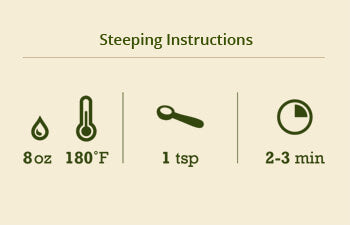
Quantity of tea: one level teaspoon per 8 oz cup of water |
|
Water temperature: use water that has been heated until bubbles begin to form on the bottom of the pot (180° F) |
|
Steeping time: 2-3 minutes |
Tip #1: Use fresh water whenever possible - water that has been sitting in your kettle overnight may impart a flat or stale taste to your tea. Be careful not to boil your water for too long. Over boiled water can sometimes impart an unwanted taste.
Tip #2: Keep in mind that brewing your tea for too long can extract undesirable bitterness from the leaves, so steeping time matters! For a stronger brew, don’t steep longer, just use more tea.
Learn more from our How To Guides on how to brew loose leaf tea, how to make iced tea, and how to make tea lattes. And don’t forget to check out our Eco-Brewing Tips, too!

There are five significant components found in all tea from the plant camellia sinensis: essential oils, which are the source of tea’s delicious flavor and aroma; polyphenols, which are antioxidants that provide the tea’s brisk flavor and many of its health benefits; phytonutrients, which are small amounts of vitamins, minerals, and amino acids including L-theanine (a very rare molecule that has been found in only three sources including camellia sinensis!) ; enzymes; and methylxanthines, which are a family of alkaloids that include caffeine. Each of these components work differently in the human body and a full description is best left to a medical journal. However, recent research exploring the potential health attributes of tea is leading many scientists to agree that tea, may contribute positively to a healthy lifestyle.
Some research comparing different types of tea has shown that the manufacturing process does affect the level of antioxidants present in the final tea leaf. According to a 2006 review of the beneficial effects of green tea in the Journal of American College of Nutrition, when comparing dry leaves, unoxidized green tea retains more antioxidants than black, oolong, or pu-erh. The catechin (or antioxidant) that displays the greatest increase in green tea when compared to the black, oolong and pu-erh is EGCG (epigallocatechin-3-gallate). (Reference: "Beneficial Effects of Green Tea - A Review" Journal of the American College of Nutrition, Vol 25, No 2 (2006))
For a more in-depth discussion of Tea and Health Benefits check here.
For a more in-depth discussion of Tea and Caffeine check here.
Loading... Please wait...