American Iced Tea
According to the USDA, Americans consume more than 2.2 billion gallons of tea per year, about 80 percent (around 1.75 billion gallons) of which is iced. That's an average of nearly 6.5 gallons of iced tea per person! Iced "sweet tea" has been consumed in the south for 100 years or more, but with the rise of fast food restaurants (nearly all of which sell iced tea), America has watched its tea consumption double in the past 30 years.
Iced black tea was most likely introduced to America during the 1904 St. Louis World Fair by tea merchant Richard Blechynden. The fair was held on a sweltering day in the summer, and Blechynden was having a difficult time promoting hot Indian black tea to the attendees. So, the enterprising merchant and his staff developed an apparatus in which brewed Indian tea would flow through iced lead pipes, creating a chilled beverage and a successful day for Blechynden!
Even though iced black tea was formally introduced in 1904, Americans had been enjoying iced teas for at least a 100 years before the World’s Fair. The first iced teas served in the U.S. were tea punches, a combination of infused green tea, sugar, sweet cream and liquor, wine or champagne. The first published instance of a tea punch was in a 1839 cookbook titled The Kentucky Housewife. Like tea punches, classic southern sweet teas predate the 1904 World’s Fair. The first sweet tea recipe was published in a 1879 cookbook by Marion Cabell Tyree called Housekeeping in Old Virginia. It called for green tea, sugar and lemon. And the first instance of sweet tea made with black tea was published in Mrs. Lincoln's Boston Cook Book: What to Do and What Not to Do in Cooking in 1884 in a recipe called "Iced Tea or Russian Tea." Russians did not tend to drink iced tea at the time, but they predominantly drank hot black tea so the “Russian” in this recipe likely referred to the use of black tea, rather than green tea.
British Afternoon Tea
Anna, the 7th Duchess of Bedford, is credited with the origination of afternoon tea in the early 1800s. In Anna's day, lunch was served at noon, with dinner often put off until well into the evening. As the story goes, Anna decided that a light meal over tea in the late afternoon would be the perfect solution to her between-meal hunger. Given Anna's social stature, the concept took off among the upper class, proving to be an excellent social venue. The term "high tea" is actually owed to England's working class, who transformed the afternoon tea into their primary evening meal, serving much heartier fare such as meats, cakes, bread and pies. High tea is a reference to the table the working class sat at while taking their tea - tall in comparison to the low, delicate tables at which the gentry took their lighter, more formal tea. Queen Victoria introduced the English to the Russian custom of adding lemon to their tea after visiting one of her daughters in Russia - before that, the English took only milk with their tea.
Click on the following links to purchase the teas traditionally used in this custom:
Organic English Breakfast Black Tea
Organic Irish Breakfast Black Tea
Organic Decaf English Breakfast Black Tea
Butter Tea from Tibet
Butter tea, known as Po cha in Tibet, is made from churning tea, salt and yak butter. The tea used is a particularly potent, smoky type of brick tea from Pemagul, Tibet. A portion of this brick tea is crumbled into water and boiled for hours to produce a smoky, bitter brew called chaku. This is then stored until used to make butter tea. To make a serving of Po cha, some of the chaku is poured in a wooden cylindrical churn called a chandong, along with a hunk of yak butter and salt, it’s then churned for a couple of minutes before serving.
Po Cha is consumed several times a day, every day, by Tibetans. There are many benefits associated with drinking po cha, especially in high altitude areas like Tibet, because of its warming quality and high calorie count, which keeps energy levels up. The butter from the drink also helps prevent chapped lips – another valuable benefit on Tibet’s windy, exposed steppes. It is also believed that the tea used aids digestion, keeps the mind focused, and promotes a healthy cardiovascular system.
Care to give it a try? Butter tea is not for the faint of heart, but might be just the thing for your next expedition! The authentic ingredients used to make po cha are hard to find outside Tibet, but you can still get a close taste using our Tibetan Butter Tea Recipe.
Chinese Gong Fu Method
In China, tea is often brewed using the meditative Gong Fu method. This formal, ritualized approach to tea preparation dates back to the Ming dynasty (1368-1644 AD). The term "Gong Fu" refers to skill gained through practice - expertise derived not from learning but experience. While the term "Gong Fu" could signify the serious practice of any art form, such as the martial art of related name (Kung Fu), Gong Fu Cha refers to the elaborate preparation of tea using miniature Yixing pots, cups and tea pets (small clay figurines). Yixing teaware is named for the purple clay it is made from, which hails from Yixing in China's Jiangsu province. Everything in Gong Fu service is small and delicate, placing emphasis on the elegance of the tea. Balled oolongs are the preferred tea in the Gong Fu ritual; they are steeped multiple times to highlight the evolution of taste as the leaves unfurl.
Click on the following links to purchase the teas traditionally used in this custom:
Organic Ti Kuan Yin Oolong Tea
Dragonwell Lung Ching Lore
Dragonwell Tea is considered the tea of royalty and has a specific manufacturing process that was perfected on Lion Peak Mountain (a mountain in the western part of Zhejiang province). Its manufacturing technique has been emulated by numerous other areas in China, but the most authentic Dragonwell teas comes from the West Lake District. One of the many differentiating steps during its manufacture is the hand-roasting in a wok. There are two temperature ranges necessary for proper roasting: a lower temperature range (140-160 degrees F) to burn off the tiny white hairs that naturally cover the leaves and remove most of the water; and a higher temperature range (175-212 degrees F) for 12-15 minutes to broaden and flatten out the leaves. Tea craftsmen and women may spend up to 3 years learning their craft and earning their title.
There is an incredible amount of Chinese lore surrounding Lung Ching (or Long Jing), with each tale more mystifying than the last. The following is a story is translated from the work of a Chinese blog writer named 刘胜权, and it goes something like this:
A long long time ago there was an old woman who lived by a dragon well (a type of large mortar). Near her house and the mortar grew eighteen wild tea trees of the type that usually grew in mountainous regions. Right outside her front door ran the busiest part of a street that the NanShan farmers used to travel to Xi’Hu. When travelers passed by, they always wanted to take a break at this spot, so the old lady set up a single table and a wooden bench for passersby. At the same time, she thought she could use some of the wild tea leaves and water from the old mortar to brew up some tea. It would be a great place for members of her community to rest before making the journey to Xi’Hu. Little did she know, some day this spot would become known throughout the world.
One winter, only a few days before the new year, when the snow was falling and piling up very deeply, and the tea trees were about to be frozen through and die, there was an unending stream of travelers on their way to buy New Years gifts. In spite of the cold, all of these people still stopped at the old woman’s door. One elderly man, as soon as they saw the old woman instantly asked:
“Grandma, have you bought anything yet for New Years?”
The old woman sighed and replied, “Don’t speak of New Years. I can’t afford to buy anything. I only have these few tea trees, and even they are about to freeze to death. Next year, when spring comes, I won’t even be able to give out tea anymore.”
“That is your most valuable article,” the elder said, pointing to an old, busted mortar. “It doesn’t even have any use. You could only benefit by selling the old thing.”
The old lady replied. “This mortar gets better the older it gets. Now, even if I washed it, it would be worthless. A broken mortar would never sell, and for some things, you just want to take care of them in the future.”
The elderly man dug ten silver pieces from the bottom of the mortar and offered them to her, but the old lady dare not take the money. When she turned around the old man had vanished without a trace, so she had no choice but to keep the money herself. A year passed, and during the second spring, tender buds and new leaves sprouted on the eighteen tea trees, and the trees grew better than before. Even more miraculously, wherever she splashed the water from the old mortar more trees grew, and before long the trees were more numerous than ever before. From then on, the old lady was able to happily continue brewing tea for any who passed by. Thus goes the story of the birth of Dragonwell tea.
In this story, it is implied that the old man was a wandering spirit who enjoyed the tea and the service the old lady provided. Noticing that she was in trouble, he put her dedication to tea to the test. Seeing that she was faithful to her brewing method, and that she cared well for the mortar and tea trees which enabled her to run her business, the spirit left her enough money to make it through the difficult winter, and blessed her mortar with the ability to grow tea trees.
Click on the following links to purchase the teas traditionally used in this custom:
Organic Dragonwell Lung Ching Green Tea
Organic Emerald Spring Lung Ching Green Tea
Gunpowder Green Tea
Gunpowder teas are green teas native to the Zhejiang Province of China, and have been around since the Tang dynasty (618-907 CE). Though Zhejiang has historically been the primary source of gunpowder teas, a number of other provinces now contribute to the production of this style, in addition to locales beyond China’s borders. Evidence of British interest in gunpowder teas can be found as early as 1771, in “Osbeck’s Voyage to China and the East Indies,” by Johann Forster. He describes a type of tea “rolled up like peas” and in 1795, the British ambassador to China comments on “The shrub which bears what is called the Imperial and Gunpowder teas.”
Gunpowder tea leaves are rolled into little balls to help protect them from physical damage during transport and storage, and help preserve the flavor of the tea. Traditionally, the individual leaves were rolled by hand, and in the highest quality varieties this is still the case. However, the majority of gunpowder teas are rolled by machines these days. In many cases, the friction of the machine-rolling process will heat up the leaves, altering the flavor and imparting a roasted quality.
There are several possible sources for the “gunpowder” sobriquet:
- The rolled-up tea leaves look like little gray pellets of gunpowder
- The pellets “explode” as they steep in hot water
- Teas in this style tend to have a smoky flavor, and the British are fond of puns!
Click on the following links to purchase the teas traditionally used in this custom:
Organic Gunpowder Green Tea
Organic Moroccan Mint Green Tea
Hakka Lei Cha – Central Chinese Tea Soup
Tea isn't just good for drinking but can also be a versatile cooking ingredient. In Southeast Asia tea-based soup is popular within the Hakka community. The Hakka people or the Hakka Han migrated from the Yellow River area in central China to Southeast Asia over the last century. They brought with them strong cultural practices which have been relatively well preserved, such as their distinctive culinary expertise.
Lei Cha literally translates to “pounded” or “crushed” tea. It is believed that Lei Cha was derived from a soup called the “Three-Raw-Ingredients Soup” consisting of tea leaves, crushed fresh ginger and rice. This soup was consumed by Hakka soldiers for rejuvenation and was brought down to Southeast Asia. The modern day Lei Cha came into existence by further enriching the original “Three-Raw-Ingredients Soup” recipe.
Lei Cha, as it is known and enjoyed today, is commonly made from oolong tea, various roasted nuts and seeds, mung beans and crushed puffed rice. It is commonly enjoyed with an array of side dishes made from leek, long beans, kale, string beans, cabbage, dried radish and aduki beans. The combination of these side dishes and Lei Cha make for an incredibly delicious and nutrition-packed meal.
The authentic ingredients used to make hakka lei cha are hard to find outside China, but you can still get a close taste using our Hakka Lei Cha Central Chinese Green Tea Soup Recipe.
Indian Masala Chai
Masala Chai (or simply referred to as “Chai”) has been a tradition throughout India for centuries. This spicy hot beverage is a brew of Indian black tea with a unique blend of spices, typically including cinnamon, ginger, nutmeg, cloves, cardamom and pepper, although the recipe varies region to region. Chai is consumed morning and afternoon by many Indian families, and is customarily the first thing offered to houseguests. So prevalent is the service of Chai throughout India that baristas, known as Chaiwallahs, can be found at just about every corner. These chai vendors are a staple of the community and their stands are often a source of news and gossip.
Click on the following links to purchase the teas traditionally used in this custom:
Organic Masala Chai Black Tea
Organic Masala Chai Rooibos
Organic Decaf Masala Chai Black Tea
Learn how-to Make a Chai Latte at Home.
Japanese Tea Ceremony
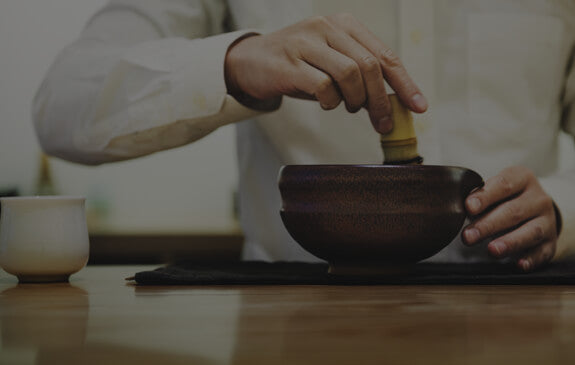
The Japanese tea ceremony (cha-no-yu, chado, or sado) is a traditional ritual in which powdered green tea, called matcha, is ceremonially prepared by a skilled practitioner and served to a small group of guests in a peaceful setting. Cha-no-yu ("hot water for tea"), usually refers to a single ceremony or ritual, while sado or chado ("the way of tea") refer to the study or doctrine of tea ceremony. The Japanese tea ceremony has its roots in early Chinese tea ritual (approx. 800 AD), influenced greatly by Zen Buddhism. However, the exacting formula for the tea ceremony we know now evolved years later, in isolation from the Chinese practice of taking tea. Every element of the tea ceremony, from the greeting of guests to the arrangement of flowers, even the architecture, is rigidly prescribed, requiring the host to be knowledgeable in a broad range of arts and disciplines. Even the participants of the tea ceremony must be familiar with the proper gestures, phrases and actions required of them throughout the ceremony.
There is quite a bit of tradition around the bowls that matcha is traditionally drunk out of, as well. The matcha tea bowl (chawan or jawan), was developed in the 16th century by Sen no Rikyū the tea master credited for establishing the Japanese tea ceremony, the meditative practice of making and enjoying matcha tea, in collaboration with a Kyoto tile maker Chōjirō. The style they developed became known as Raku.
Raku teaware is famous for its rustic wabi-sabi qualities that emphasize simplicity, natural imperfections, and the colors and textures that echo those of the natural world. In fact, the Raku-style matcha tea bowl is said to be a “microcosm within your hands.”
Originally, the Raku-style matcha tea bowl was seen as a rejection of traditional beauty standards in favor of the natural. In fact, “wabi” means “not to be in the fashionable society” whereas “sabi” means “aloneness” or “solitude.”
Today, bowls that follow the Raku style, with a wide base and smooth interior, are desired not only for their aesthetic qualities but their practicalities. If you’ve ever tried to whisk matcha in a regular teacup, you’ve likely wanted for a cup with a wider base – really, a bowl – with which to whip up your matcha to frothy perfection. In the Zen tradition, each tea bowl is given its own name, and is said to have its own personality and unique existence. The colors and textures of a matcha tea bowl, which change over time, are referred to as its “scenery.” Matcha tea bowls are designed to fit into the palm of your hand, which is perfect for sipping and sharing a bowl of matcha.
Japanese Tea Gardens play a role in Japanese tea ceremonies as well. The Japanese tea garden, or Roji, originated during the Muromachi Period, and were specifically designed for meditation and contemplation before the Japanese tea ceremony. Today, Japanese tea gardens in the U.S. take on many features, not only of the rustic Roji, but of the various styles of Japanese garden, which have evolved over the centuries from the extremely formal and stylized to the more natural.
Here are a few of our favorite Japanese tea gardens throughout the U.S.: Richard and Helen DeVos Japanese Garden - Frederik Meijer Gardens, Grand Rapids, MI Shofuso Japanese House and Gardens- Philadelphia, PA Morikami Museum and Gardens - Delray Beach, FL Portland Japanese Garden - Portland, OR Seattle Japanese Garden - Seattle, WA Japan House Garden - University of Illinois Urbana-Champaign, Urbana, IL
Click on the following links to purchase the teas and teaware traditionally used in this custom:
Organic Matcha Green Tea Ceremonial Grade
Organic Matcha Green Tea Cooking Grade
Bamboo Whisk
Matcha Scoop
Matcha Bowl Gift Set
Jasmine Green Tea
Jasmine tea has been a mainstay in Fuzhou, the capital city of Fujian, since the 12th century. It has even outlasted other varieties of scented teas, including rose, terrestrial orchid, and gardenia teas, which were popular during the Ming Dynasty. Some believe that jasmine tea is the perfect balance of Yin and Yang – the green tea representing the warming Yang and jasmine representing cooling Yin. This perfect balance of Yin and Yang is thought to be harmonious. In fact, in Chinese medicine, jasmine tea is prescribed in the treatment of a variety of conditions – from fevers to inflammation.
Generally speaking, the term "jasmine" refers to an entire genus of shrubs and vines within the olive family Oleaceae. But the kind used to scent tea, Jasminum sambac, is a berry-producing plant that can manifest as either an evergreen vine or a shrub, and is native to southern Asia. It also goes by the name Arabian jasmine. It grows in full sun to partial shade, blooming from June to September. Interestingly, many jasmine plants only bloom fully at night, which is when it's most aromatic. As such, late night is the optimum time to pick jasmine blossoms when used for scenting tea.
In Fujian, when the jasmine blooms, it's time to go to work, harvesting it in large wicker baskets and carrying it to the tea plantations. There, the jasmine is combined with a special selection of green tea that’s held every year in anticipation of jasmine season. The jasmine blooms are layered on top of the green tea, and left overnight, until the scent of jasmine permeates the tea; then, the jasmine is discarded. This process is repeated several times until the tea is perfectly scented. This results in a perfect balance of flavor and aroma - you won't get any of that overwhelming soapy taste that comes with artificially flavored jasmine teas. The tea is then “fired” one more time to prevent spoilage. Then, this intensely floral tea is ready for market.
It's worth pointing out that this scenting process is a very different process than "flavoring," where essential oils or extracts are mixed in with the tea and left there to be consumed with the tea.
Click on the following links to purchase the teas traditionally used in this custom:
Organic Jasmine Green Tea
Organic Jasmine Pearl Green Tea
Kashmiri Chai
The western world is no stranger to chai. Chai has been popularized in coffee shops all over as creamy, spiced, black tea. Kashmir’s take on chai is slightly different. There are 2 major types of tea beverages, Sheer Chai and Kahwah. Both are an important part of Kashmiris’ daily lives.
Sheer Chai: This drink also known as gulab chai or noon chai, is a lot like the famous masala chai that many associate with the term chai. It is also spiced and milky. However, with one sip, it is easy to distinguish the two; Sheer chai is salty! The other distinct feature of the drink is its pinkish color. This pink hue is a result of the chemical reaction between the tea and the baking soda, one of the ingredients. The tea most commonly used in sheer chai is a strong green tea called ‘pahari’ tea, which can be difficult to find outside the region of Kashmir. However, a similar taste can be achieved by using a semi-oxidized tea like an oolong.
Kahwah Chai: Kahwah, sometimes spelled Kehwa or Qehwa is somewhat like the sheer chai, but without milk and salt. It is a green tea enjoyed spiced and sweet. It is particularly popular among the Kashmiri Pandit community. The type of tea used for this beverage is also a particular green tea specific to the region, but its taste can be somewhat approximated by using gunpowder green tea.
The authentic ingredients used to make Sheer Chai and Kahwah are hard to find outside Kashmir, but you can still get a close taste using our Kashmiri Chai Recipe.
Moroccan Mint
As with many cultures across the globe, the consumption of tea holds great significance in Moroccan life. This is demonstrated in part by the highly ornate teapots (often engraved silver), trays, and crystal glasses used in its preparation and service. Traditionally, tea is prepared in a samovar which brews strong, highly concentrated tea. Usually a gunpowder variety of green tea is used. After brewing, the tea is heavily sweetened with sugar and flavored with a touch of mint. The teapot is held high in the air while pouring the tea into the small, delicate glasses. This showy feat is made possible by the long and slender curved spout on the Moroccan teapot (and a lot of practice). Moroccan Mint Green Tea is an excellent accompaniment to rich and flavorful Moroccan cuisine.
Click on the following link to purchase the tea traditionally used in this custom:
Organic Moroccan Mint Green Tea
Pu-erh: A National Secret
Pu-erh, a city located in the Yunnan Province of China, is the namesake of pu-erh tea, the most famous subset of Chinese heicha (dark tea). Pu-erh processing is a closely guarded secret. Each tea garden has a unique recipe and prides itself on its own distinctive creation. Properly cared for, pu-erh tea is actually alive as enzymes in the tea are allowed to age, greatly enhancing the tea’s flavor over time. This is accomplished by introducing a small amount of moisture at the end of the manufacturing process and allowing the retention of that moisture in the final tea leaf; then aging the leaf in a controlled environment. Pu-erh is the only “aged” tea, and can be fully-oxidized like black tea or unoxidized like green tea. Qing Cha (sometimes referred to as “raw” or “green” pu-erh) is the oldest and most famous version of pu-erh processing. Shu Cha (“ripe” or “cooked” pu-erh) is an accelerated version of Qing Cha that was developed in 1972 to help meet consumer demand. Both methods can produce an excellent tea that improves in value and taste with time, and can be finished as loose leaf tea or pressed into shapes. Pu-erhs that have been aged for 10, 15 or even 25 years and beyond are typically unavailable outside China and are served only to high ranking officials and dignitaries.
Pu-erh teas are actually a subset of heicha or dark tea. Dark tea is a category of tea manufacturing style that is at the same top categorical level as a green or white tea. Dark teas are a category of teas produced historically in China that are allowed or encouraged to ferment (in the true sense of the word) after some measure of processing. The name describes the dark brown liquor of the infusion. While traditionally produced in China’s Yunnan, Hubei, Hunan, Anhui, and Guangxi provinces, they are produced in Korea and Japan. Pu-erh is just one example of dark tea, and the most well-known in the USA. As a result, most US-based tea companies (including us) refer to pu-erh as a top level tea manufacturing style, rather than a subset. Its namesake, Pu-erh, is a city in the Yunnan Province of China, and interestingly grows no tea within its city limits. The town became an important hub of tea distribution, and thus the tea was named accordingly. Fermented dark teas are becoming more popular with the help of pu erh!
Click on the following links to purchase the teas traditionally used in this custom:
Organic Ancient Green Tuo Cha Pu-Erh Tea
Organic Pu-erh Premium Tea
Organic Sheng Pu Erh
Organic Wild Tree Mini Tuo-Cha Pu-Erh Tea
Samovar and Russian Tea
Given the significant influence Asian culture has had on Russia through the years, it is no wonder that Russians are big tea drinkers. The samovar, which is somewhat of a cross between a hot water heater and teapot, is one of many examples of this influence - it is presumed to have evolved from the Tibetan hot pot. The function of this unique apparatus, and the Russian method of taking tea, is rather different than we are accustomed to in the west. Instead of heating tea water on the stove, wood or charcoal is traditionally burned within the samovar itself to accomplish this task (modern samovars often use an electric heating element, however). A small teapot sits on top of the samovar, in which a dark, concentrated brew is made, called zavarka. Hot water from the samovar is used to dilute this tea when served. Dark Indian or Chinese black teas are commonly used, often coupled with herbal or fruit teas and enjoyed with lemon and/or jam. Russian Caravan, a blend of black teas with a slightly smoky flavor, is a favorite. To this day, samovars remain a focal point of the Russian home.
Click on the following links to purchase the teas traditionally used in this custom:
Organic Lapsang Souchong Black Tea
Thai Iced Tea
Tea has been drunk and even eaten in Thailand for a very long time, but tea cultivation is relatively new to the country. Only since the 1980s has tea been grown for production in Thailand. Thai iced tea, known as “cha yen or ชาเย็น” in Thailand, is a popular street drink. It’s usually a mixture of a black tea (usually not sourced from Thailand) and spices such as vanilla, cardamon, star anise, tamarind, and orange blossom water. It is often topped off with a heaping dollop of sweetened condensed milk. Although it’s grown in popularity in the US, thai iced tea isn’t largely traditional or important in Thailand - it’s more of a treat. Thai chefs started adding copious amounts of sugar and food coloring to appeal to Americans, and thus the thai iced tea we know was born. The drink has become ubiquitous in Thai restaurants throughout the US. In Thailand, thai tea is consumed warm in the morning, and only served iced in the afternoon - always with crushed ice, never cubed. Rarely prepared in the home, thai iced tea is usually purchased from stands on the street where it is often served in a plastic bag with a straw stuck into it.
Click on the following links to purchase the teas traditionally used in this custom:
Organic Thai Iced Tea
Ti Kuan Yin Lore
According to legend, the name Ti Kuan Yin came from a Qing Dynasty Emperor who became very ill, and no remedy could cure him. One day an advisor to the court (from Fujian) shared some of his homegrown oolong tea with the Emperor, who was miraculously cured. Upon his recovery, the Emperor named this tea "Ti Kuan Yin," which translates to "Iron Goddess Of Mercy.” The Emperor declared that the tightly rolled and well-baked tea leaves resembled iron and had the healing powers of the Buddhist Goddess Of Mercy (Kuan Yin).
Click on the following link to purchase the tea traditionally used in this custom:
Organic Ti Kuan Yin Oolong Tea
Yerba Mate: South America’s Beloved Drink
Yerba Mate (Ilex paraguariensis) is a small tree native to the subtropical highlands of Brazil, Paraguay, Uruguay, and Argentina. In much of South America, leaves of this plant are infused in water in a dried calabaza gourd and sipped through a filtered straw, called a "bombilla." This healthful brew is considered "the drink of the gods" by many indigenous peoples in South America, and is a staple in the diets of many South American cattlemen, or "gauchos," being a food product that can stand up to the rigors of life on the range. So prevalent is the consumption of yerba mate in South America, that mate bars are as widespread as coffee shops in the US. Traditionally, mate is often shared among close friends and family. The gourd and bombilla are passed around and around, refilling from time to time, in an act celebrating companionship.
Click on the following links to purchase the teas traditionally used in this custom:
Organic Yerba Mate