Tea and Caffeine
All tea from the plant Camellia sinensis contains caffeine. Decaffeinated tea is a great option for tea lovers who wish to avoid much of the caffeine naturally found in the tea leaf. However, a true caffeine-free beverage is only found in our herbal caffeine-free selections. In this section we explore the many different methods of decaffeination. Arbor Teas uses the carbon dioxide (CO2) method for all of its organic decaffeinated teas.
The Difference Between Decaffeinated Tea and Caffeine-Free
It is important to understand the difference between “decaffeinated tea” and “caffeine-free” tea, especially for those who are unable to consume caffeine.
Decaffeinated Tea
"Decaffeinated" refers to a product that originally contained caffeine and then underwent a process to remove most of its caffeine content. Decaffeinated tea is NOT caffeine-free. The decaffeination process leaves a minute amount of caffeine in the leaf. By law, tea labeled as “decaffeinated” must have less than 2.5 percent of its original caffeine level, which usually equates to less than 2 mg per cup.
Caffeine-Free Tea
"Caffeine-free" refers to a product that never contained caffeine to begin with. Caffeine-free products are labeled as such on our website and include our herbal blends and rooibos. The exceptions are Yaupon and Yerba Mate, which contain caffeine.
Decaffeination Methods
Currently, there are four methods of decaffeination: methylene chloride, ethyl acetate, carbon dioxide, and water processing. In the United States, ethyl acetate is the most widely used decaffeination method for tea.
Supercritical CO2 Decaffeination
CO2 is a non-toxic, nonflammable, colorless and odorless gas which is a naturally-occurring part of the air we breathe. Although elevated levels of CO2 in our atmosphere contribute to global warming, it's generally an inert substance. Under pressure and temperature, however, CO2 is able to flow freely through natural materials (like tea) and has strong solvent capabilities. This is called its "supercritical" state, which is why CO2 decaffeination is also referred to as "Supercritial CO2 Decaffeination" or "Supercritical Fluid Extraction."
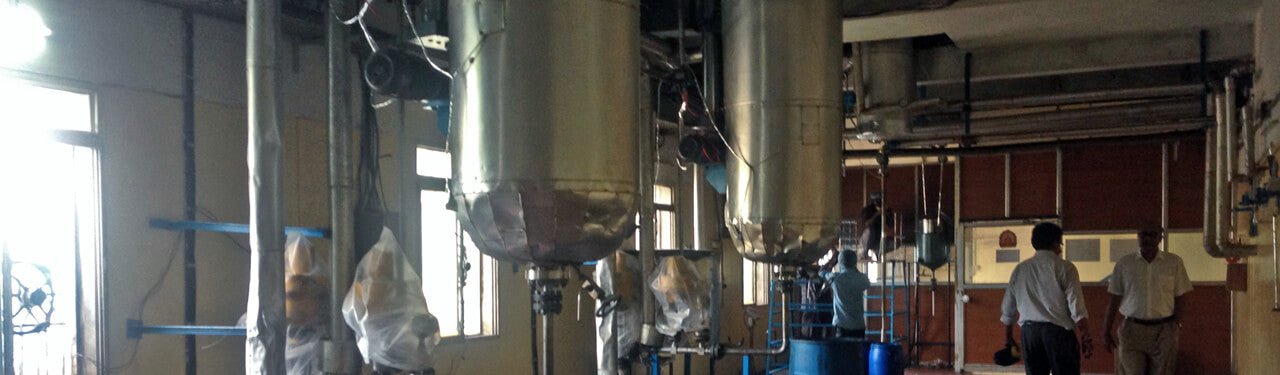
To begin the CO2 decaffeination process, the tea leaves are moistened with water and placed under pressure. Then streams of pressurized and heated CO2 are passed through the tea leaves, where it bonds with the caffeine molecules while leaving the tea leaves otherwise intact. After passing through the tea leaves, the caffeine-laden CO2 is filtered to remove the caffeine, and then recycled for further use in decaffeination. Finally, the newly-decaffeinated tea leaves are dried.
Arbor Teas uses the carbon dioxide (CO2) method for our organic decaffeinated teas. We feel that this is the safest form of decaffeination, while retaining the greatest flavor and health benefits. According to tea "technologist" Nigel Melican, tea decaffeinated using the CO2 method retains 92 percent of its polyphenols (antioxidants) compared to tea decaffeinated using the ethyl acetate process, which only retains 18 percent. We also support the CO2 decaffeination method because the CO2 used for decaffeination is filtered and recycled at a rate of around 99% and emits very little CO2 into the atmosphere.
Methylene Chloride Decaffeination
Methylene chloride decaffeination is a process by which the molecules of caffeine bond to molecules of methylene chloride. Caffeine is removed directly; by soaking the tea leaves in methylene chloride. Or it is removed indirectly; by brewing the tea (which removes the caffeine from the tea leaves), then adding methylene chloride to that brew (which removes caffeine from the brew), and then re-introducing the brew to the tea leaves for reabsorption of flavors and oils. Because methylene chloride is widely believed to be unfit for human consumption, a legal limit of 5 parts per million is placed on residual traces in the tea and the U.S. bans all imports using methylene chloride.
Ethyl Acetate Decaffeination
Tea processed using ethyl acetate is often referred to as “naturally decaffeinated” because ethyl acetate is a chemical naturally present in many organisms. Caffeine is extracted in the same way as with methylene chloride processing, but using ethyl acetate as the solvent. However, ethyl acetate is very difficult to remove after the decaffeination process, and is sometimes described as leaving a chemical taste.
Water Decaffeination
Caffeine extraction with water is used primarily for coffee decaffeination, although a small amount of tea products are decaffeinated using this method. Sometimes referred to as the “Swiss Water Method,” this decaffeination method removes the caffeine by soaking the tea in hot water for a period of time. The resulting brew is passed through a carbon filter for caffeine removal. The liquid is then reintroduced to the tea for reabsorption of flavors and oils. This process is sometimes described as “watering down” the flavor of the tea.
Note: decaffeinated tea is NOT caffeine-free. All of the decaffeination processes discussed above leave a minute amount of caffeine in the leaf.
Can You Decaffeinate My Favorite Tea?
We’ve been asked why we don’t carry decaffeinated versions of all of our teas, to which we offer the following explanation. Decaffeinating teas with CO2 Decaffeination requires costly equipment and substantial amounts of energy, which typically makes it cost-ineffective to decaffeinate small batches of specialty teas. Only the most mainstream varieties are generally considered for decaffeination, usually versatile black and green teas that can be sold “as is” or blended in some fashion to create products like Decaf English Breakfast, Decaf Earl Grey, etc.
Additionally, you’ll rarely see a decaffeinated version of a limited-production premium tea, like our Silver Needle White Tea or Gyokuro Green Tea. These products are already rather expensive and have a limited market demand, so creating a more expensive decaffeinated version to offer an even smaller group of customers is both prohibitively expensive and energy-inefficient. Occasionally, tea gardens will even refuse to sell their tea if they know it will be decaffeinated, as they feel it will lower the quality. However, don't fret! To lower the caffeine content of a tea that is not offered in a decaffeinated version, please read our discussion on the Decaffeination at Home technique (below).
Tea With the Least and Most Caffeine
"Which tea has the least (or most) caffeine?" is one of our most popular questions. The answer is complicated, to say the least. Aside from our herbal caffeine-free selections, NO tea is caffeine-free. Even decaffeinated teas retain a very small amount of caffeine after the decaffeination process (usually less than 2 mg per cup).
Caffeine occurs naturally in the leaves of the tea plant, Camellia sinensis. The amount of caffeine that is transferred from that leaf into your cup depends on many things: varietal, age of leaf, method of manufacture, production techniques, steeping time, and the water temperature used during steeping.
Because there are so many variables, no one can tell you the exact amount of caffeine in your cup unless a caffeine counter is used immediately before you drink from it. We have read documents claiming that white tea is the least caffeinated tea and others proclaiming it to be second only to black tea as the most caffeinated tea. Despite all of this, here are a few rules of thumb when it comes to understanding how much caffeine is in your tea:
- NO tea from the plant Camellia sinensis is caffeine-free; even decaffeinated teas have a small amount of caffeine
- When brewed at our recommended serving size, any variety of tea (black, green, oolong, white and pu-erh) will have less caffeine than coffee
- Generally speaking, green tea brewed with 180-degree water has less caffeine than black, oolong, white and pu-erh tea. Because a lower water temperature is used during steeping, less caffeine will be extracted from the tea leaf
- Within the green tea options, Hojicha Green Tea is reputed to have lower caffeine than other green teas because of the unique roasting technique that is part of its manufacturing process
Home Decaffeination
Many think that the majority of tea’s caffeine is released in the first 45 to 60 seconds of steeping, but new research released by tea “technologist” Nigel Melican has debunked this theory. Melican asserts that the quick decaffeination method at home does not work nearly as well as previously thought. His research suggests that on average only 20% of the caffeine content is removed using the quick decaffeination method, rather than the 80% previously purported.
Regardless, if you need a way to lower your caffeine intake in a pinch, or have a favorite tea you can’t get in a decaffeinated version, consider using the following easy at-home decaffeination method to reduce the caffeine in your cup.
- Place your loose leaf tea in your infuser. Then place your infuser inside your brewing vessel. Cover with a small amount of boiling water (just enough to cover the leaves).
- Steep for one minute, then remove the infuser/tea bag and discard the water.
- Re-infuse the same tea leaves in fresh water heated to the appropriate temperature for the tea being brewed and steep for the customary amount of time.
This cup should now have a lesser amount of caffeine! Keep in mind that small amounts of caffeine remain in tea decaffeinated by any method - only naturally caffeine-free herbal and fruit infusions lack it completely. It is also worth noting that the method described above may somewhat diminish the flavor and aroma of your tea.
Making the Switch - Coffee to Tea
Many of our customers began drinking tea in an effort to eliminate coffee from their diet. Tea, like coffee, offers a ritual of treating oneself to a delicious drink and satisfying that yearning for a daily hot beverage.
For customers who are switching from coffee to tea, we recommend trying our pu-erh teas. These dark-colored teas brew to (almost) the same color as coffee and have a similar mouth feel. Many coffee lovers find these thicker, mellower brews to be the most akin to coffee, despite their obvious difference in taste. Be advised that pu-erh tea has a unique smell that is surprising at first, but it soon becomes a welcome friend.
If you were a daily consumer of cafe lattes or cappuccinos, consider making a tea latte. This variation on the traditional latte may satisfy your desire for a milk-based drink without the coffee.
Check out our easy step-by-step guide on How to Make a Tea Latte.