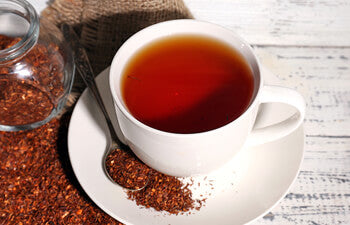
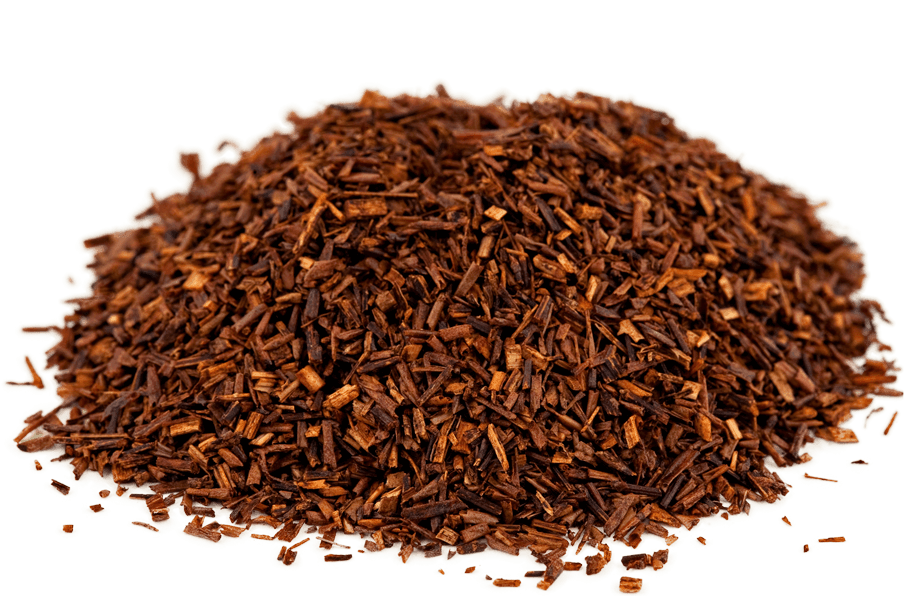
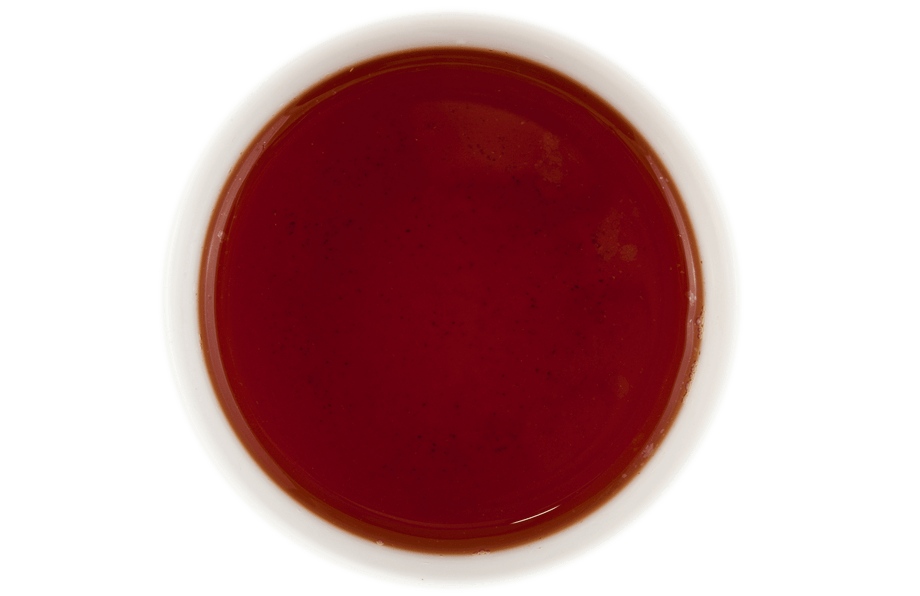
This organic, Fair Trade Certified infusion combines organic rooibos leaves (pronounced ROY-bus) with the classic flavor of natural oil of bergamot. This organic loose leaf herbal tea will not disappoint Earl Grey lovers looking for a little something different! Rooibos is an herb native to the beautiful Cedarberg region of South Africa and contains no caffeine.
|
Ingredients: organic South African rooibos and natural bergamot flavor |
|
Serving Size: one level teaspoon per 8 oz cup of water |
|
Aubrey Says: The tart citric quality of the bergamot gives this rooibos a drier mouthfeel than most rooibos blends. |
|
Jeremy Says: A very pronounced Earl Grey flavor stands up nicely to the distinctive rooibos flavor. |
Posted by Antony Galbraith on 5th May 2010
This fragrant tea is a wonderful non-caffeinated alternative to the standard black-tea based Earl Grey. The bergamot flavor is substantial enough that it is not lost against the natural flavor of the rooibos without overpowering. If you like the citrus flavor of bergamot and seek caffeine alternatives this is the tea for you.
Posted by Bill Edwards on 14th Nov 2008
This adds variety to the green teas that are my standard. The balance of Earl Grey with the rooibos is just right. For my taste buds rooibus always calls for something to add some interest and the bergamot flavor is a perfect match.

We at Arbor Teas firmly believe that tea should be brewed to suit your personal taste. With that being said, here are some recommendations to get you started, but please remember you can make adjustments based on your own personal taste.
There are three main considerations when brewing tea: quantity of tea, water temperature and steeping time.
|
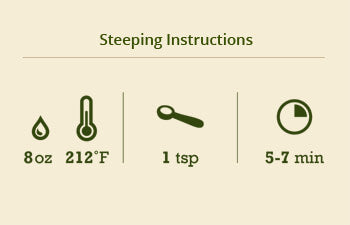
Quantity of tea: one level teaspoon per 8 oz cup of water |
|
Water temperature: use water that has been heated to a full rolling boil (212° F) |
|
Steeping time: 5-7 minutes |
Tip #1: Use fresh water whenever possible - water that has been sitting in your kettle overnight may impart a flat or stale taste to your tea. Be careful not to boil your water for too long. Over boiled water can sometimes impart an unwanted taste.
Tip #2: Rooibos, unlike tea from the plant camellia sinensis, does not get astringent with longer brew times. So if you happen to steep longer than 7 minutes, don’t worry! Your rooibos will gain more flavor, but it will never become astringent!
Learn more from our How To Guides on how to brew loose leaf tea, how to make iced tea, and how to make tea lattes. And don’t forget to check out our Eco-Brewing Tips, too!

Rooibos tea originates from the leaves and stems of the indigenous South African plant Aspalathus linearis. In contrast to tea from the plant camellia sinensis, rooibos is naturally caffeine free and low in tannins. Tannins are what give tea from the plant camellia sinensis its astringent (mouth puckering) property. Because rooibos is low in tannins, its brew has very little astringency.
Antioxidative activity has also been attributed to rooibos on the basis of its flavonoid content! Often, customers will ask us "Does Rooibos have more or fewer antioxidants than tea?" Unfortunately, at present conflicting evidence is found comparing the levels of antioxidant activity in rooibos with antioxidant activity in tea from the plant camellia sinensis. One method of analysis found rooibos to have antioxidant activity less than green tea, but greater than black tea. In contrast, another method resulted in antioxidant activity less than all tea from the plant camellia sinensis.*
*Source: "Comparison of the antioxidant activity of rooibos tea (Aspalathus linearis) with green, oolong and black tea " by A. Von Gadow et all, Food Chemistry, Volume 60, Issue 1, 1997.
For a more in-depth discussion of Tea and Health Benefits check here.
For a more in-depth discussion of Tea and Caffeine check here.
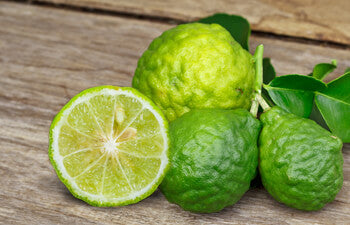
Traditional Earl Grey is a blend of black tea flavored with the essence of Bergamot rind, though the name may also be used to refer to any tea—black or otherwise—that uses bergamot as a flavoring (such as our organic green Earl Grey, and our organic Earl Grey rooibos blends). Bergamots are small tart oranges native to southern Vietnam that research suggests are a cross between the sweet lemon, Citrus limetta, and the sour orange, C. aurantium, and the essential oils from their rinds are what give Earl Grey its characteristic flavor. Consequently, the tea often sees use in all manner of confectionary, lending a subtle, citrusy zest to chocolates (like our tea-infused truffles!), cakes, or sauces.
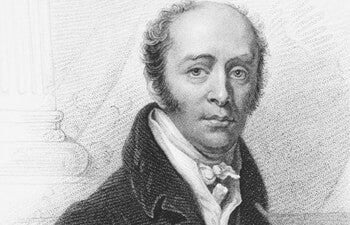
This famous tea is named for an English prime minister, Lord Charles Grey the second, from the 1830s who first popularized its consumption. There is a popular legend that the Earl received the tea as a gift from a grateful Mandarin after one of his men saved the Mandarin (or his son, depending on which version of the story you hear) from drowning. Charming though it is, the story has no basis in fact, because the Earl never traveled to China during his life. Beyond that, no records indicate that the Bergamot was even cultivated in China at that time, so this tea would have been a very unusual gift!
Nevertheless, the current Earl Grey, Lord Charles Grey the sixth, maintains that at the very least his ancestor was given the tea as a gift from a Chinese envoy, and he endorses Twinings of London’s recipe for the tea. Interestingly, the English teahouse Jacksons of Piccadilly also claims to be in possession of the original recipe for Earl Grey, having received it from the Earl himself in 1830.
For information on other traditions or to submit your own tea tradition visit our Tea Traditions section.
Loading... Please wait...