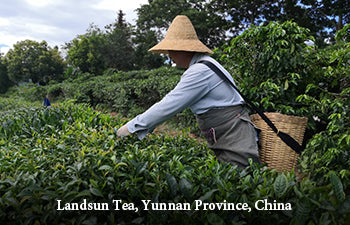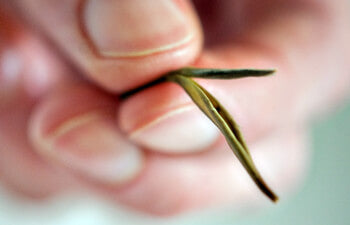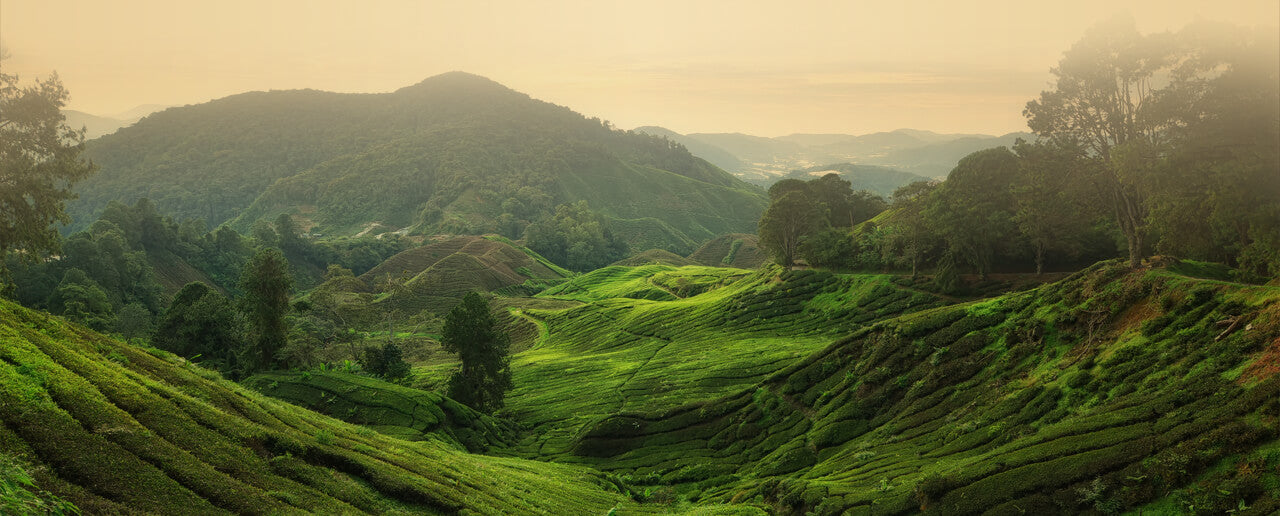
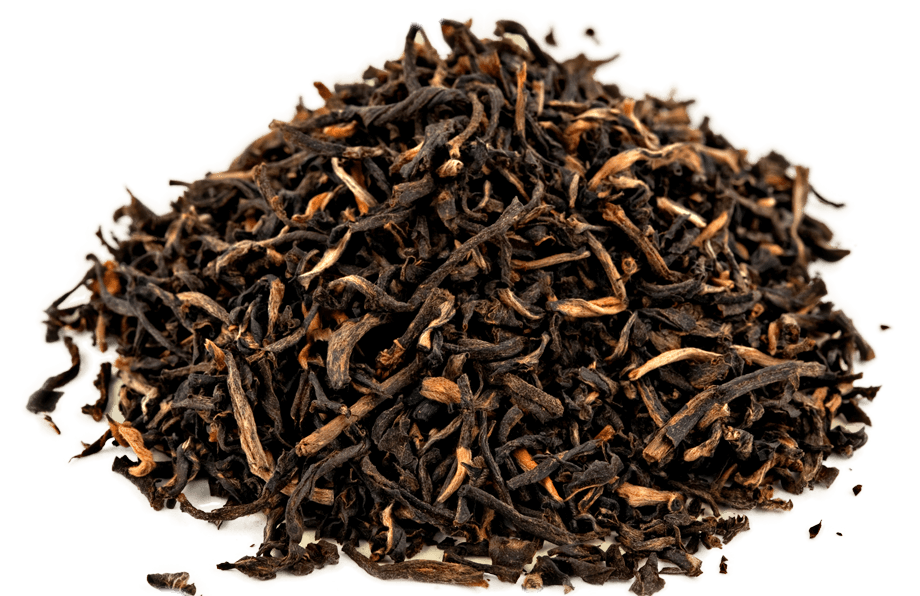
Loading... Please wait...This exquisite organic black tea hails from the Jing Mai Mangjing region of China's southwestern Yunnan province, made from the 1300-year-old organic tea trees found there - some of the oldest living tea trees in the world. The people of Jing Mai Mangjing's high mountain tea villages climb their ancient tea trees to harvest the new growth leaves and buds used to create this organic and Fair Trade Certified tea. This organic tea from China is quite tippy, rich with golden buds and large, delicately twisted leaves. The full-bodied infusion is deep red with a molasses-like sweetness, a subtle milkiness and light coppery finish.
|
Ingredients: organic Chinese black tea |
|
Serving Size: one level teaspoon per 8 oz cup of water |
|
Aubrey Says: This is - without a doubt - my favorite black tea! I love everything from the first whiff of the leaf to the last drop in the cup - a creamy, malty, spicy delight! |
|
Jeremy Says: A sure bet for black tea lovers! |
Posted by Lauren on 20th Mar 2013
This is a great, full-bodied black tea that definitely wakes me up in the morning. It has a sort of creamy aftertaste to it, even without any added milk. This may become my everyday morning tea - yum!
Posted by Joseph Paulson on 7th Nov 2012
The dry leaf darkest brown. With the eponymous golden strands flecked throughout. In hand, it does feel like a treasure. The aroma gives up some pleasant leather and smoke. Not scary smoke. Hint of smoke. The liquor brews dark, dark red-brown. This tea possesses an exquisite mouth-feel. So much body, so much briskness, has never been so smooth.
Posted by Jeff M. on 21st Jun 2012
The thought of this tea / waiting for me / in my dandy Arbor Teas canister / helps me get out / of my bed when I should / though I still don’t slide down the banister.
Posted by Unknown on 22nd Jan 2012
Arbor Teas golden yunnan is my go-to black tea. It has a delicious rich, malty flavor but the highlight to me is the mouthfeel. Even when taken black this tea is so creamy and smooth that it's hard to believe there's not some milk in there. I don't know how they do it. I love a cup of this tea first thing in the morning.
Posted by Sean on 11th Dec 2011
My favorite black tea. It has a full flavor (oakey/spicy) with a bit of a soft feel in the mouth. Pleasant, very faintly honey-like aftertaste. I can sense a touch of cinammon in the aroma. Great overall experience in other words.
Posted by Todd on 22nd Mar 2011
This is the best so far I've tried. It is really worth the price. It has the most flavor with no problems. If you want to see what black tea is all about this is it! Worth the extra dollars over the less expensive black teas which are all good. So good that no sweetener is needed.
Posted by Ben Schuchard on 27th Feb 2011
This is one of our favorite teas ever! Love the copper color and buttery finish of this tea! Highly recommended!
Posted by Go Blue! on 26th Mar 2008
This is my daily tea. It is malty and deep yet not overpowering. It is also a tea that everyone who visits seems to like.

We at Arbor Teas firmly believe that tea should be brewed to suit your personal taste. With that being said, here are some recommendations to get you started, but please remember you can make adjustments based on your own personal taste.
There are three main considerations when brewing tea: quantity of tea, water temperature and steeping time.
|
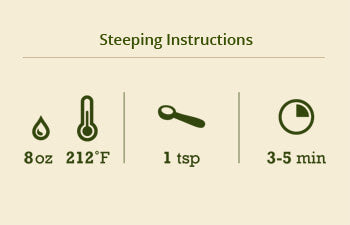
Quantity of tea: one level teaspoon per 8 oz cup of water |
|
Water temperature: use water that has been heated to a full rolling boil (212° F) |
|
Steeping time: 3-5 minutes |
Tip #1: Use fresh water whenever possible - water that has been sitting in your kettle overnight may impart a flat or stale taste to your tea. Be careful not to boil your water for too long. Over boiled water can sometimes impart an unwanted taste.
Tip #2: Keep in mind that brewing your tea for too long can extract undesirable bitterness from the leaves, so steeping time matters! For a stronger brew, don’t steep longer, just use more tea.
Learn more from our How To Guides on how to brew loose leaf tea, how to make iced tea, and how to make tea lattes. And don’t forget to check out our Eco-Brewing Tips, too!

There are five significant components found in all tea from the plant camellia sinensis: essential oils, which are the source of tea’s delicious flavor and aroma; polyphenols, which are antioxidants that provide the tea’s brisk flavor and many of its health benefits; phytonutrients, which are small amounts of vitamins, minerals, and amino acids including L-theanine (a very rare molecule that has been found in only three sources including camellia sinensis!) ; enzymes; and methylxanthines, which are a family of alkaloids that include caffeine. Each of these components work differently in the human body and a full description is best left to a medical journal. However, recent research exploring the potential health attributes of tea is leading many scientists to agree that tea, may contribute positively to a healthy lifestyle.
For a more in-depth discussion of Tea and Health Benefits check here.
For a more in-depth discussion of Tea and Caffeine check here.