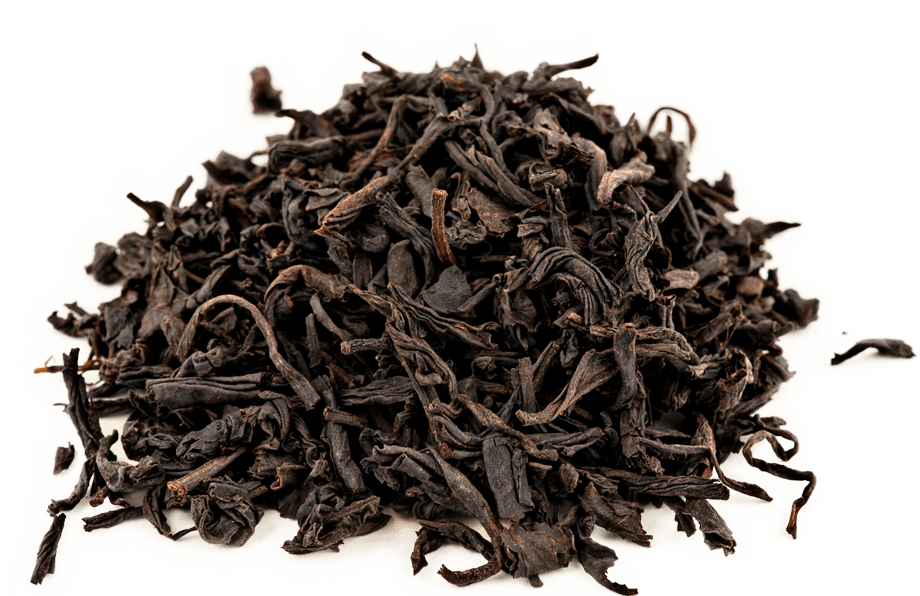
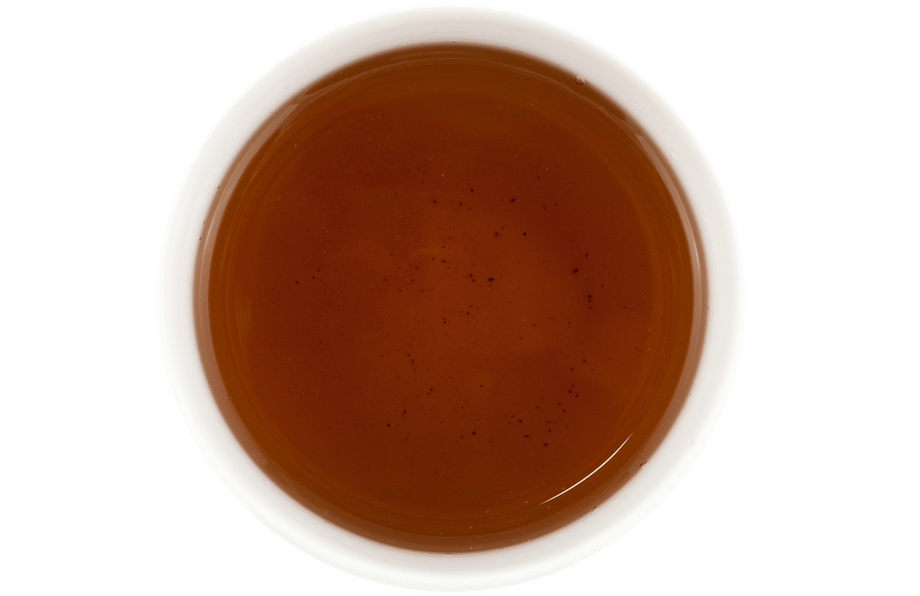
Loading... Please wait...This Fair Trade Certified organic tea from the Fujian province of China is smoked during manufacture, giving it a distinctive flavor and aroma, sometimes referred to as tarry. It has a light body, with a smooth crisp character and a very prominent, heady aroma of a pine wood fire.
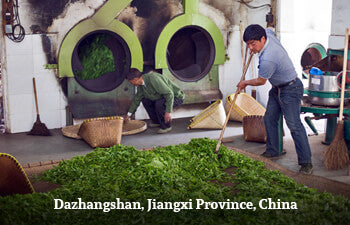
Legend claims that the smoking process that produces this remarkable organic black tea was discovered by accident. During the Qing dynasty, an army unit passing through the village of Xingcun camped in a tea factory filled with fresh leaves awaiting processing. When the soldiers left and the workers could get back into the factory, they realized that to arrive at market in time, it was too late to dry the leaves in the usual fashion. So they lit open fires of pine wood to hasten the drying. Not only did the tea reach the market in time, but the smoked pine flavor created a sensation! Today, this organic tea from China is dried over smoking pine fires in order to absorb the smoke flavor. Lapsang Souchong is generally consumed with sugar, milk and/or lemon.
|
Ingredients: organic Chinese black tea |
|
Serving Size: one generous teaspoon per 8 oz cup of water |
|
Aubrey Says: This tea reminds me of liquid smoke floating in my mouth - a unique experience. |
|
Jeremy Says: We have a customer that swears by this tea for smoking meat! The flavor profile is a perfect match. |
|
Sarah Says: This is a family favorite! Even my 10 year old likes it! My husband and I always seem to brew it on a Saturday afternoon after spending the morning with the kids. |
Posted by Lauren on 7th Apr 2013
I got a sample of this on a whim, just to see what it was like. It smells exactly like a campfire, which is very nice. But, once brewed, the smokey smell and taste was just too strong for me, and overpowered the tea base.
Posted by Lukasz M. on 7th Mar 2012
I have tried so many teas over the years that I wanted to give something very different a try. Lapsang Souchong is as different as it gets. The first time I opened the package I was blown away by the intense smoke aroma. Steeping the tea doesn't diminish the intensity. In fact, the smoke aroma fills the room and the flavor is just as intense. After drinking it on its own (like I do with all of my teas), I decided to do something a purist never does- add milk and sugar. The result is a unique, smoky variation of Chai tea. Even with just a sampler, I still have plenty left. It's just not a tea I'm ever drawn to. It's just too intense for me.
Posted by Judy on 26th Sep 2011
My husband loves this tea! I buy it in bulk and he makes his own. This is what he wants on a cold winter night!
Posted by Bill Edwards on 24th Sep 2010
From the moment I opened the package my taste buds leapt with anticipation caused by the intriguing aroma. They were not disappointed by the taste. I drank it straight--no milk no lemon. The taste is almost sweet. Licorice? I wondered. My son came into the room and asked what the wonderful smell was. For me this will not be an every day tea--I do not want to get used to its flavor. I want to savor it for a special treat.
Posted by Royce Faina on 16th Jun 2010
This tea is to the tea world what Single Malt Scotch Whiskey is to liquors! My favorite of all time! Russian caravan tea is my second favorite.
Posted by Antony Galbraith on 5th May 2010
Lapsang Souchong is one of my favorite black teas. I could drink it morning noon and night (if I didn't have to eventually sleep). Not surprisingly I am quite picky about my Lapsang Souchong. I only drink organic black tea which already limits my choices. After trying Arbor Tea's Lapsang Souchong tea I can safely rank it among the best. The flavor is strong and smoky yet light on the tongue. I love drinking this tea as it reminds me of sitting by a campfire underneath a clear starry sky. What a wonderful fragrance. I also enjoy this tea iced. It makes a refreshing alternative to the typical black iced tea.
Posted by A fan on 11th Mar 2008
This is my favorite of all of the lovely teas I've ordered from ArborTeas. It's not for the faint of heart. My sister prefers "more subtle" teas and this one is too much tea for her. But I really appreciate a cup (or two) of this smoky and full bodied tea in the morning at work.

We at Arbor Teas firmly believe that tea should be brewed to suit your personal taste. With that being said, here are some recommendations to get you started, but please remember you can make adjustments based on your own personal taste.
There are three main considerations when brewing tea: quantity of tea, water temperature and steeping time.
|
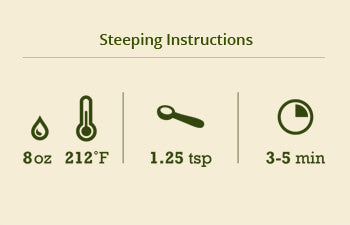
Quantity of tea: one generous teaspoon per 8 oz cup of water |
|
Water temperature: use water that has been heated to a full rolling boil (212° F) |
|
Steeping time: 3-5 minutes |
Tip #1: Use fresh water whenever possible - water that has been sitting in your kettle overnight may impart a flat or stale taste to your tea. Be careful not to boil your water for too long. Over boiled water can sometimes impart an unwanted taste.
Tip #2: Keep in mind that brewing your tea for too long can extract undesirable bitterness from the leaves, so steeping time matters! For a stronger brew, don’t steep longer, just use more tea.
Learn more from our How To Guides on how to brew loose leaf tea, how to make iced tea, and how to make tea lattes. And don’t forget to check out our Eco-Brewing Tips, too!

There are five significant components found in all tea from the plant camellia sinensis: essential oils, which are the source of tea’s delicious flavor and aroma; polyphenols, which are antioxidants that provide the tea’s brisk flavor and many of its health benefits; phytonutrients, which are small amounts of vitamins, minerals, and amino acids including L-theanine (a very rare molecule that has been found in only three sources including camellia sinensis!) ; enzymes; and methylxanthines, which are a family of alkaloids that include caffeine. Each of these components work differently in the human body and a full description is best left to a medical journal. However, recent research exploring the potential health attributes of tea is leading many scientists to agree that tea, may contribute positively to a healthy lifestyle.
For a more in-depth discussion of Tea and Health Benefits check here.
For a more in-depth discussion of Tea and Caffeine check here.
BBQ season is upon us! Will you have a vegetarian to feed in your group? Often meatless patties are dry and disappointing, especially the ones that come packaged from the grocery store. Veggie burgers are so easy to make in your home kitchen, requiring fairly minimal forethought and prep work. Check here to view the full recipe for Smoky Yerba Mate Lentil Burgers!
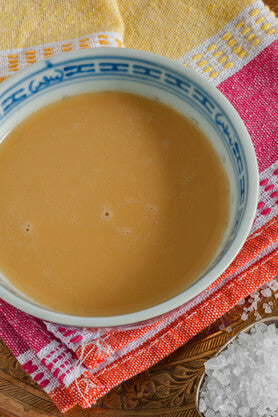
Butter tea, known as Po cha in Tibet, is made from churning tea, salt and yak butter. Butter tea is not for the faint of heart, but might be just the thing for your next expedition! The authentic ingredients used to make po cha are hard to find outside Tibet, but you can still get a close taste using the following recipe. Check here to view the full recipe for Butter Tea from Tibet!
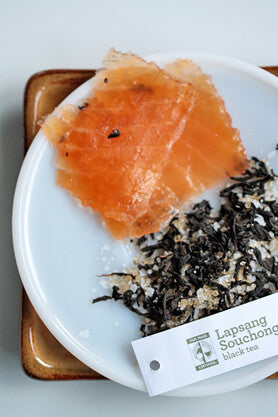
Tea-curing salmon is basically a variation on gravadlax, but with tea leaves instead of dill. Just imagine the flavor potential tea offers! Check here to view the full recipe for Tea-Cured Salmon!
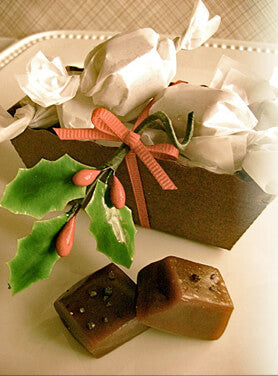
Imagine buttery sweet combined with salt and smoke. These are the flavor components that form quite possibly the most divine confection to come from my kitchen to date. Check here to view the full recipe for Smoky Lapsang Souchong Caramels!
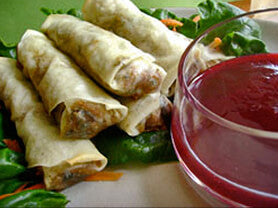
Have you ever wanted to capture the smoky fragrance of Lapsang Souchong black tea into something edible? Here is a delicious way to try it in an appetizer served with a plum dipping sauce. Check here to view the full recipe for Smoky Lapsang Souchong Spring Rolls!
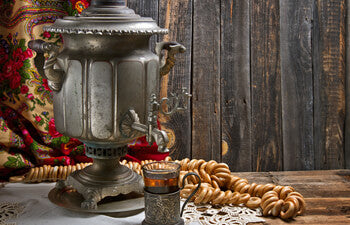
Given the significant influence Asian culture has had on Russia through the years, it is no wonder that Russians are big tea drinkers. The samovar, which is somewhat of a cross between a hot water heater and teapot, is one of many examples of this influence - it is presumed to have evolved from the Tibetan hot pot. The function of this unique apparatus, and the Russian method of taking tea, is rather different than we are accustomed to in the west. Instead of heating tea water on the stove, wood or charcoal is traditionally burned within the samovar itself to accomplish this task (modern samovars often use an electric heating element, however). A small teapot sits on top of the samovar, in which a dark, concentrated brew is made, called zavarka. Hot water from the samovar is used to dilute this tea when served. Dark Indian or Chinese black teas (such as Lapsang Souchong) are commonly used, often coupled with herbal or fruit teas. Russian Caravan, a blend of black teas with a smoky flavor, is a favorite. To this day, samovars remain a focal point of the Russian home.
For information on other traditions or to submit your own tea tradition visit our Tea Traditions section.